Measure Door Sill Height for the Right Dog Stairs Fit
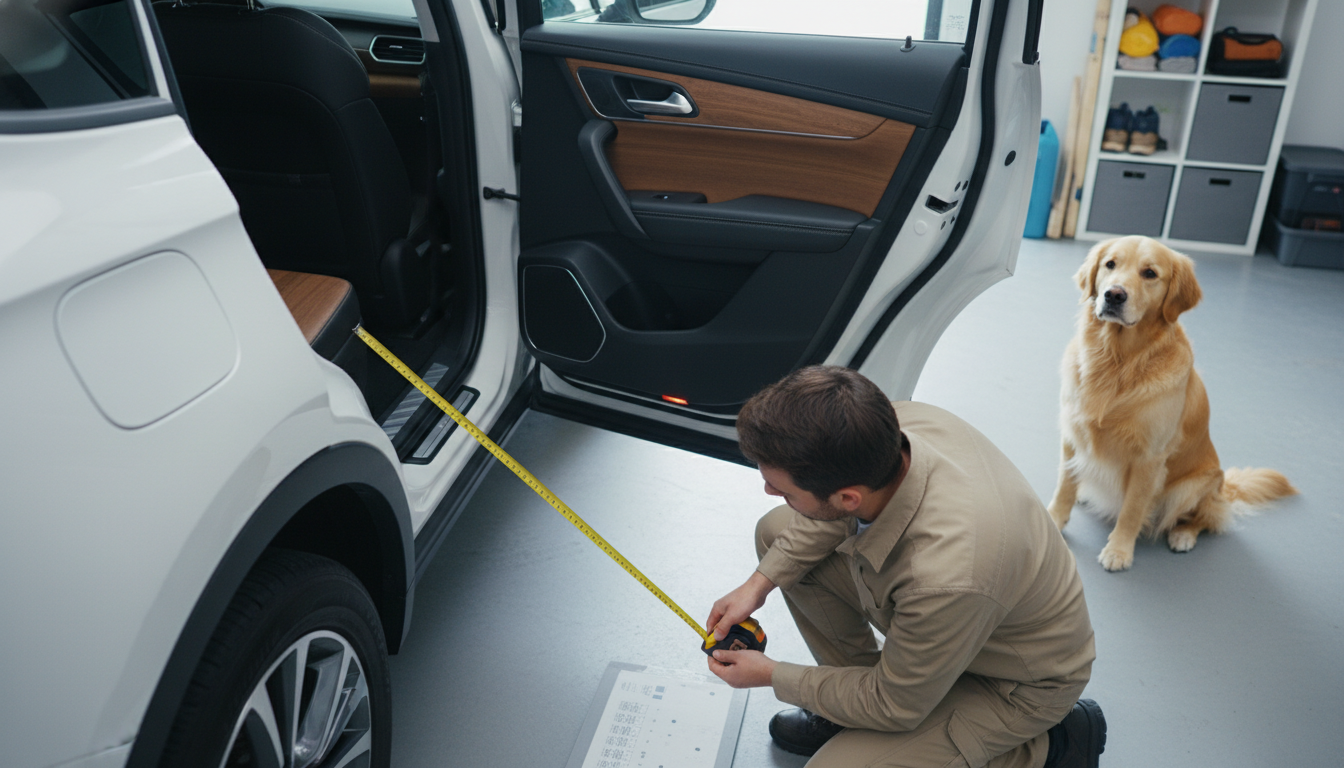
How do I measure my car’s door sill height to choose the right dog stairs length and step height?
Accurate door sill height is the starting point for picking dog stairs that feel stable and easy on your dog’s joints. You’ll measure from the ground up to the point your dog actually needs to reach, then use that number to choose an overall stair height, a comfortable step height, and enough stair length for a gentle climbing angle.
Step 1: Park on level ground and set up your measuring tools
Park on a flat surface, engage the parking brake, and open the door your dog uses most. Grab a tape measure (or a rigid ruler plus a straightedge), and if possible, have a helper hold the tape while you read it.
Step 2: Identify the “target landing point” on your vehicle
For dog stairs, the most useful measurement is to the top of the door sill/threshold where your dog will step in (not the bottom of the door opening). If your dog steps onto a running board first, measure to the running board surface instead.
Step 3: Measure the door sill height from the ground
Place the tape on the ground directly below the sill and measure straight up to the top of the sill (or running board). Record the height in inches. If your driveway slopes, re-check on a flatter spot—small tilts can change the reading.
Step 4: Use the number to choose total stair height, step height, and length
Choose dog stairs with a maximum height that meets or slightly exceeds your measured sill height, so the top step reaches the entry point without a big final “hop.” For step height, many dogs do best with shorter rises (especially seniors or small breeds), so prioritize more steps with lower rise if your measurement is tall. For length, longer stairs create a gentler incline, which typically feels more secure than a steep climb.
Step 5: Confirm fit at the car before committing
If possible, test the stairs against the open door to confirm the top step sits level with (or just under) the sill and that the base sits flat on the ground without rocking. For more detailed guidance and examples, see the full measuring guide here.
FAQ
Should I measure with the car door fully open or partially open?
Measure with the door fully open in the position you’ll use when loading your dog. This ensures the stairs can sit squarely against the entry point without being blocked by the door edge.














Leave a comment