Pendant Light Size Guide for Dining Tables & Islands
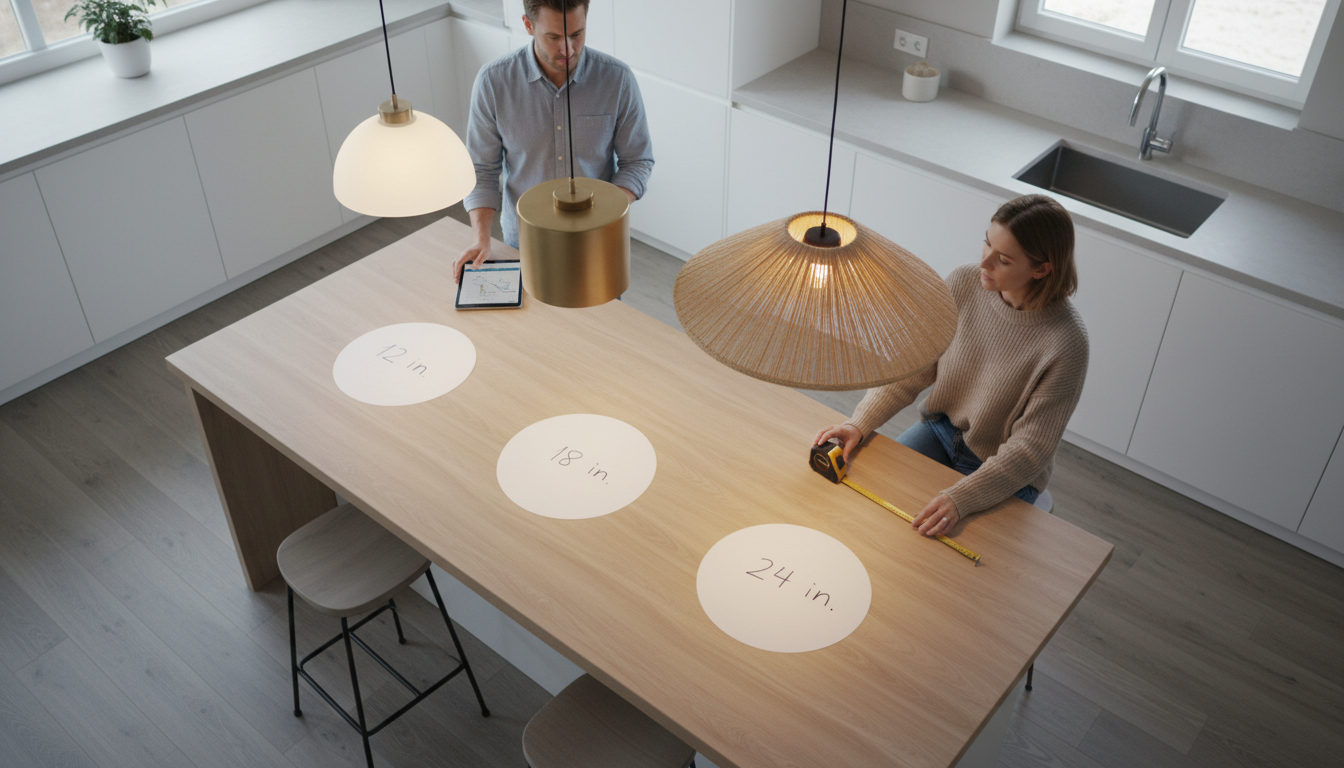
How do I choose the right pendant light size for my dining table or kitchen island?
Choosing the right pendant light size comes down to matching the fixture’s scale to the surface below and keeping comfortable sightlines. A pendant that’s too small can feel lost over a large table or island, while an oversized fixture can crowd the space and create glare.
Start with the surface width (table or island)
A reliable sizing rule is to keep the pendant (or the combined width of multiple pendants) at about one-half to two-thirds the width of the table or island. This usually looks balanced without overwhelming the surface. For a single statement pendant centered over a dining table, err toward the larger end of that range; for two or three pendants over an island, split that total width across the fixtures.
Choose diameter based on placement: one pendant vs. multiples
For a single pendant, use a diameter that visually anchors the center of the table while leaving breathing room around the edges. For multiple pendants, smaller diameters often look cleaner and provide more even light. As a practical spacing guide, keep about 24–30 inches between pendant centers and leave roughly 6–12 inches from the outside pendants to the island edges, adjusting for a narrow or extra-deep countertop.
Match height and hanging drop to the room
Height matters as much as width. Over dining tables, the bottom of the pendant typically looks best about 30–36 inches above the tabletop. Over kitchen islands, a common range is 30–34 inches above the counter, depending on ceiling height and how much task lighting you want. If your ceilings are tall, you can hang slightly higher or choose a taller fixture that fills the vertical space without blocking views.
Consider visual “weight” of the design
Open-frame lanterns, crystal accents, and warm copper finishes can read larger than their measurements because they sparkle and draw the eye. If you’re choosing an ornate style—like French medieval-inspired copper and crystal pendants—double-check both the listed diameter and the overall silhouette so it feels proportionate to the room.
For more guidance on styling and selecting statement pendants, see this French medieval copper & crystal pendant light guide.
FAQ
How many pendant lights should I hang over a kitchen island?
Most standard islands look best with two or three pendants, depending on length. Aim for even spacing and choose sizes that keep the total visual width around one-half to two-thirds of the island width.











Leave a comment