X-Inch Metal Framed Bathroom Mirror Sizing: 48×35 Guide
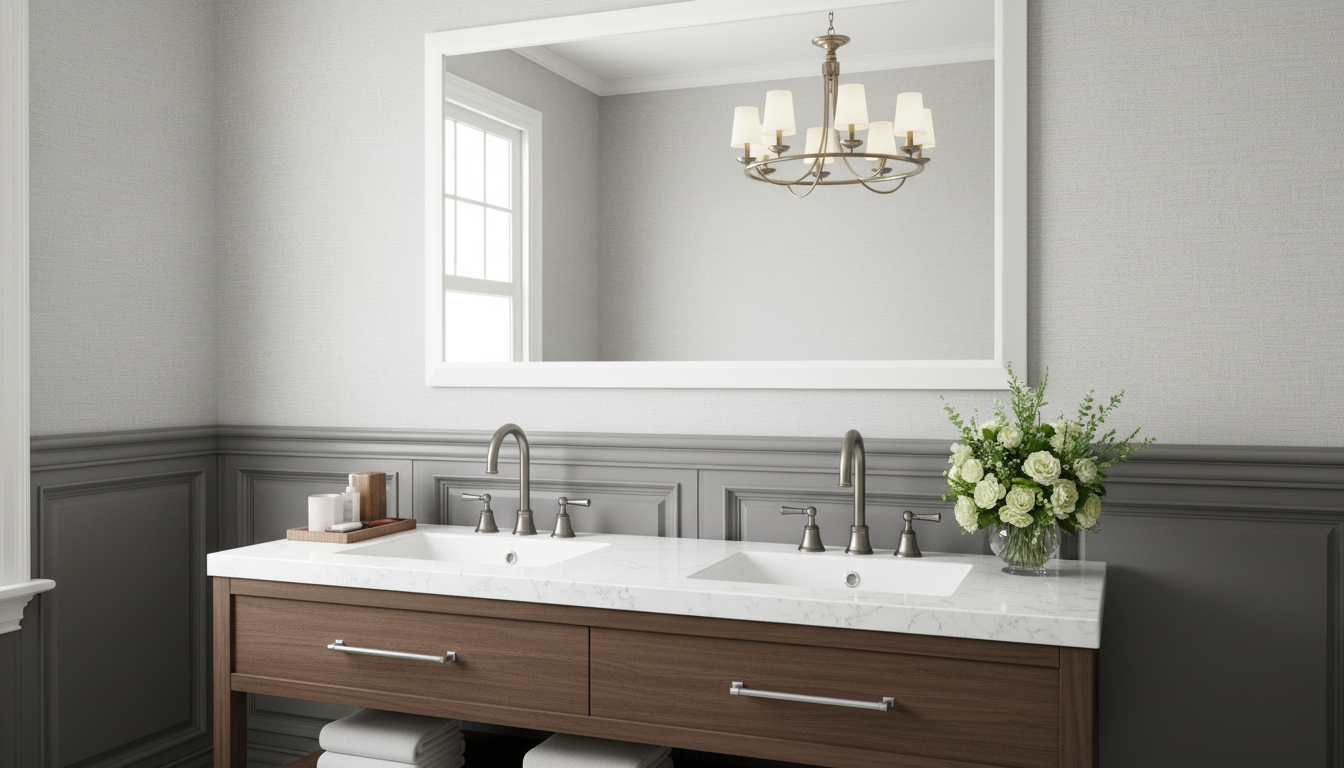
Choosing the Right X-Inch Metal Framed Bathroom Mirror (With a 48×35 Case Study)
An x-inch metal framed bathroom mirror should balance proportions, lighting, and durability. Start with the vanity width and sink placement, then confirm you have enough wall space for comfortable margins and lighting hardware. Once sizing feels right, focus on moisture resistance, a finish that coordinates with your fixtures, and secure mounting so the mirror looks intentional and holds up to daily humidity.
What “x-inch” should mean in a bathroom mirror
When a mirror is described as “x-inch,” it usually refers to the mirror’s overall width (and often a second number for height). That number matters most when you’re trying to make the mirror relate to the vanity—because a mirror that’s too wide can feel jammed, while one that’s too narrow can look like an afterthought.
- Measure the vanity width first. Many bathrooms look most balanced when the mirror is slightly narrower than the vanity rather than perfectly matching it edge-to-edge.
- Decide whether width or height is the priority. Wider mirrors support double-sink use and shared routines; taller mirrors help accommodate users with different heights and can make a room feel larger.
- Account for sconces and electrical boxes. Confirm the centerlines of lighting and the locations of junction boxes before locking in a mirror size.
- Leave margins to nearby walls and cabinets. A little breathing room near side walls, upper cabinets, or tile edges keeps the mirror from feeling cramped.
Sizing guidelines that work in most layouts
Good mirror sizing is more about visual balance than strict rules, but a few consistent guidelines simplify decisions—especially when matching common vanity widths.
- Single sink: A mirror width around 70–90% of the vanity width typically reads clean and centered.
- Double sink: Choose either one large mirror spanning most of the vanity or two matched mirrors aligned with each sink’s centerline for symmetry.
- Height: Aim for a reflective area that covers from around eye level to above the tallest user’s head. Taller mirrors can also visually lift low ceilings.
- Spacing above the backsplash: Leaving a small gap keeps the frame out of splash range and prevents the design from feeling crowded.
Quick sizing guide by vanity width
| Vanity width | Common mirror width range | Notes |
|---|---|---|
| 24 in | 18–22 in | Keeps edges clear of side walls and makes room for sconces if used |
| 30 in | 22–28 in | A popular range for single-sink bathrooms |
| 36 in | 28–34 in | Works well with a centered faucet and symmetrical lighting |
| 48 in | 38–46 in | Good for a wide single sink or compact double setups |
| 60 in | 48–58 in (one mirror) or 22–28 in each (two mirrors) | Choose one large mirror for a seamless look, two mirrors for symmetry over each sink |
Why a metal frame makes sense in a humid bathroom
Bathrooms are tough environments: steam, temperature swings, and daily wipe-downs test materials quickly. A metal-framed mirror is often a practical choice because it combines structure with a clean, architectural finish.
- Stability: A metal frame helps a mirror feel substantial and can reduce the “floating sheet of glass” look, especially on larger walls.
- Finish flexibility: White, black, gold, and mixed-metal options can coordinate with faucets, lighting, and hardware without needing an exact match.
- Moisture considerations: Look for coatings designed to resist corrosion and discoloration in damp rooms, and keep the frame as dry as possible after heavy steam.
- Cleaning: Metal frames usually wipe clean easily—skip abrasives and harsh pads that can dull coated finishes over time.
For general bathroom layout and planning clearances, the National Kitchen & Bath Association (NKBA) bathroom planning guidance is a solid reference point when coordinating mirror, lighting, and vanity placement.
Case study: a large 48×35 white metal framed mirror
A 48×35 mirror is a statement size that can dramatically improve usability in a shared or high-traffic bathroom. It’s particularly effective when the vanity is 48 inches wide or when a wide single-sink setup benefits from more horizontal viewing space.
If you’re aiming for a bright, tailored look in a larger format, consider the Large 48×35 Inch White Metal Framed Bathroom Mirror as a practical reference size for 48-inch vanities and wider single-sink layouts.
Mounting and safety essentials for larger mirrors
For deeper context on glazing safety, see ANSI Z97.1 safety glazing materials, and for broader home product safety guidance, the U.S. Consumer Product Safety Commission (CPSC) is a helpful authority.
Lighting and reflection: getting a flattering, useful view
For a coordinated bathroom refresh, pairing bright framing with warmer accents can look intentional. If you’re building a bolder, high-contrast concept around metallic finishes, the Luxurious Gold Artistic One-Piece Ceramic Toilet with Dual-Flush System can complement gold hardware and statement lighting in glam or eclectic spaces.
FAQ
Should a bathroom mirror be the same width as the vanity?
Most of the time, a mirror that’s slightly narrower than the vanity looks more balanced and leaves space for trim, tile edges, or sconces. Matching the vanity width can work when it’s a deliberate wall-to-wall look or when the room is designed around one continuous reflective surface.
Is a metal framed mirror okay for a steamy bathroom?
Yes—metal framed mirrors work well in humid rooms when the finish is designed to resist corrosion. Gentle cleaning and good ventilation help protect the coating and keep the frame looking crisp.
How high should a large mirror be mounted above the sink?
A practical approach is to leave a small gap above the backsplash and position the mirror so the reflective area comfortably covers the users’ face and head. Keep it centered to the faucet (or between sinks) and maintain clearance from lights and outlets.
















Leave a comment