Pack Light Every Time: Minimalist Digital Packing Planner
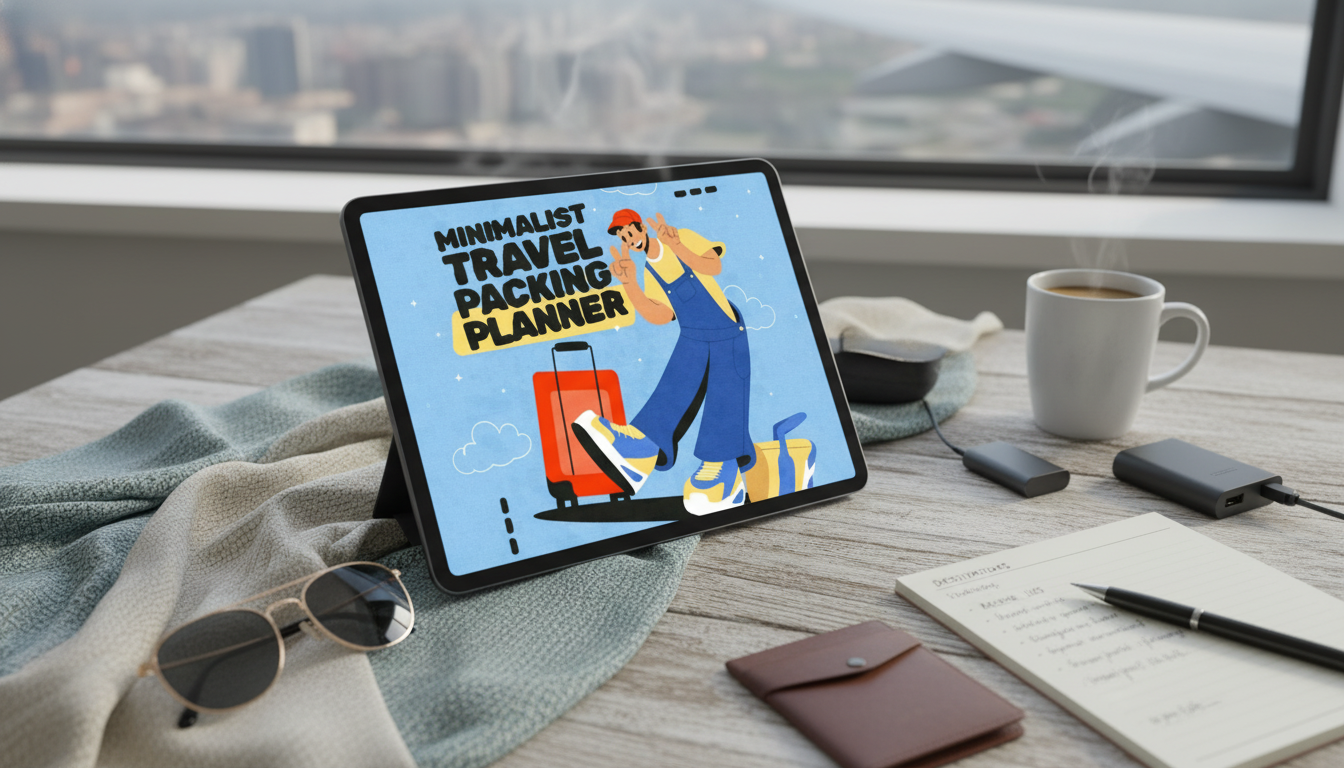
Minimalist Travel Packing Planner: A Digital Guide for Light, Smart, Stress-Free Trips
Packing light is less about owning fewer things and more about making clear decisions fast—what gets worn, what gets washed, and what actually earns a spot in the bag. A minimalist packing plan reduces last-minute stress, prevents overpacking, and helps build a repeatable system for weekends, work trips, and longer getaways.
If you want a ready-to-reuse system, the Minimalist Travel Packing Planner | Digital Packing Guide for Light, Smart & Stress-Free Trips is designed to help you map the trip, set counts based on laundry, and lock your list before the “what if?” spiral starts.
What “minimalist packing” really means (and what it doesn’t)
Minimalist packing isn’t about deprivation or forcing everything into a tiny bag at all costs. It’s a practical decision framework: pick versatile basics, plan intentional re-wears, and stick to a simple color palette so nearly everything works together. That approach keeps you comfortable while cutting down on excess.
It also means packing for your real schedule—weather, activities, dress codes, transit days, and whether you’ll have laundry access. Instead of bringing piles of “just in case” items, you replace them with small, realistic contingencies: a compact first-aid mini-kit, a packable layer, and the willingness to buy/borrow something if an unlikely need actually happens.
Most importantly, minimalist packing reduces decision fatigue by using the same checklist structure every time. The goal is not to reinvent your process—just adjust it for each trip’s constraints.
Start with the trip map: constraints that decide your packing list
Before you choose a single outfit, define the constraints that will decide your quantities and priorities. A 4-day city trip with daily walking is a different packing problem than a 4-day conference with evening dinners.
- Duration and laundry plan: No laundry, sink wash, or laundromat changes how many base layers you need and which fabrics make sense.
- Climate reality: Check day/night temps, rain risk, and wind—not just the “average” for the destination.
- Mobility level: Walking-heavy days raise the value of one excellent shoe and a blister plan.
- Baggage rules: Personal item vs. carry-on vs. checked bag affects toiletry sizes, layers, and tech choices.
- Activities and formality: One intentionally chosen “nice” outfit can cover multiple dinners or events.
Quick trip constraints checklist
| Constraint | What to decide | Impact on packing |
|---|---|---|
| Laundry access | None / sink wash / machine | How many base layers and underwear to bring |
| Weather swings | High/low temps + rain risk | Layers, packable shell, fabric weight |
| Shoes needed | Walking + dress needs | Usually 1–2 pairs max for minimalist loads |
| Bag type | Personal item / carry-on | Toiletry sizes, number of outfits, tech choices |
| Dress code | Casual / business / events | One adaptable outfit beats multiple niche items |
Build a capsule that works: the simple outfit formula
A minimalist capsule starts with an easy palette: pick 2–3 main colors and keep most items in that lane. This instantly boosts mix-and-match options and prevents “orphan” pieces that require special shoes or a specific jacket.
Then use the 3-layer approach:
- Base layer: Next-to-skin comfort (tees, tanks, underwear, socks).
- Mid layer: Warmth and versatility (button-down, sweater, fleece, cardigan).
- Outer layer: Weather protection (packable rain shell, light puffer, or a wind-resistant jacket).
A minimalist packing workflow that prevents overpacking
For carry-on travel, confirm rules for liquids and restricted items before you finalize toiletries. The TSA’s official guidance is the fastest way to avoid surprises at security: TSA: What Can I Bring?.
Using a digital packing planner to stay light and organized
For a structured, repeatable setup, use the Minimalist Travel Packing Planner | Digital Packing Guide for Light, Smart & Stress-Free Trips and make it your default starting point for weekends, work travel, and longer itineraries.
If stress is what triggers overpacking, pairing your packing routine with a calming reset can help. The digital guides Mindful Moments: How Mindfulness Eases Stress and Boosts Your Daily Calm and Breathe, Mama, Breathe: Finding Calm in the Kid-Chaos can fit neatly into a pre-trip wind-down—especially when you’re packing after a long day or juggling family logistics.
For international trips, it’s also smart to check destination-specific health guidance and recommended vaccines before you pack medications: CDC: Travelers’ Health. If you’re traveling with multiple devices, review airline and safety rules around spare lithium batteries: IATA: Dangerous Goods Regulations (Lithium batteries overview).
Common packing mistakes (and minimalist fixes)
FAQ
How many outfits are enough for a minimalist trip?
For most minimalist trips, plan 2–4 core outfits plus layers, then rely on re-wearing and laundry. For a 3–5 day trip, 2–3 bottoms and 3–4 tops usually covers it; for a 7–10 day trip, aim for 3–4 bottoms and 5–7 tops if you’ll do at least one wash (sink or machine).
What are the best fabrics for packing light and re-wearing?
Quick-dry, wrinkle-resistant fabrics are ideal—especially for base layers that may be washed in a sink and dried overnight. Look for materials that manage odor well and stay comfortable across temperature swings, so you can re-wear without feeling sticky, stiff, or rumpled.
How can packing feel less stressful the day before a flight?
Use a timed workflow: finalize the checklist, stage items by zones (outfits, toiletries, tech, documents), and stop making new decisions after a set cutoff time. A short calm-down routine—ten minutes of quiet breathing, stretching, or a simple reset—helps reduce decision fatigue and keeps “panic packing” out of your bag.












Leave a comment