Italian Minimalist Pendant Light: Living & Dining Guide
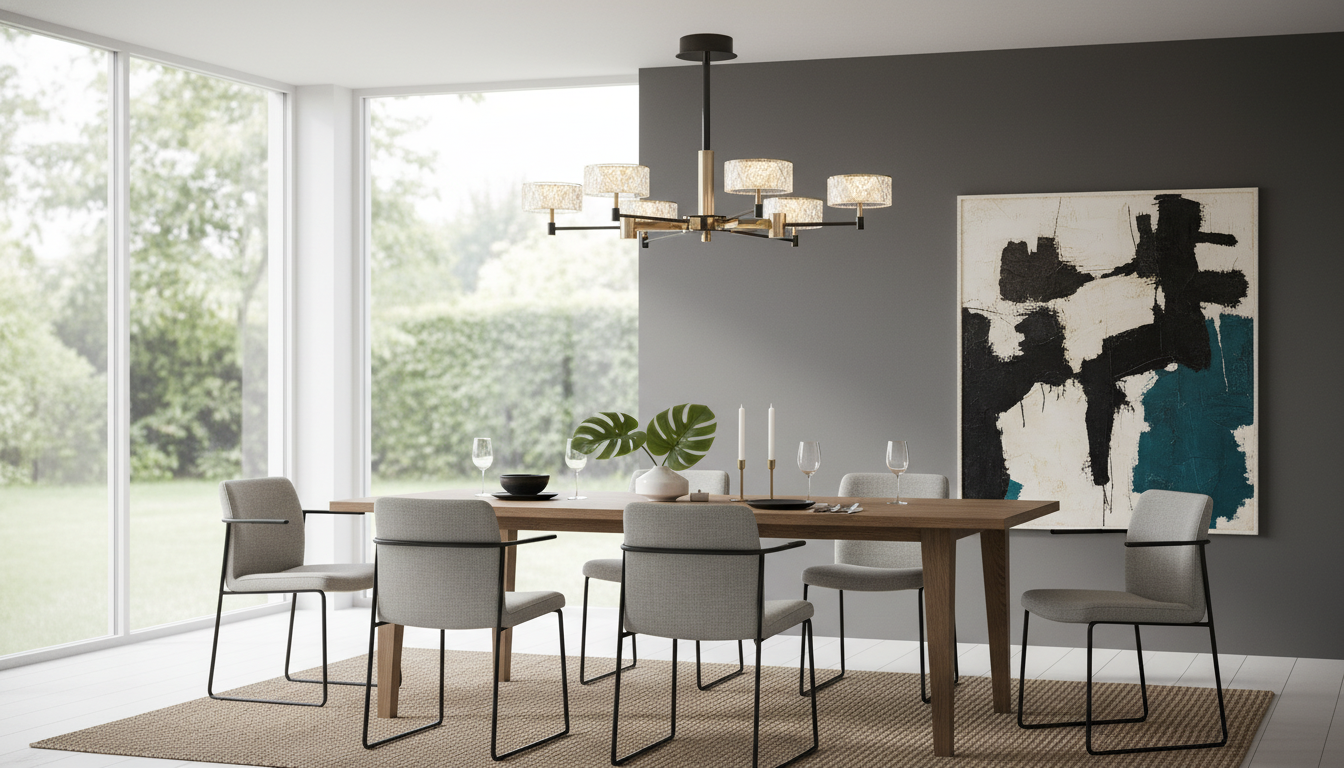
Modern Minimalist Luxury Italian Pendant Light for Living Room and Dining Area
A well-chosen pendant light can define the mood of a room as much as the furniture does—especially in open-plan living and dining spaces where one fixture often anchors multiple zones. This modern minimalist Italian-inspired pendant is designed to look sculptural by day and create focused, comfortable illumination by night, helping living rooms feel calmer and dining areas feel more intentional.
What Makes This Pendant Feel Minimalist—and Luxurious
Minimalism doesn’t have to feel cold. The right fixture balances restraint with presence, offering a clean outline that still reads as elevated and considered.
- Architectural silhouette: Clean, restrained lines create a crisp, modern profile rather than an ornate statement.
- Statement without clutter: It stands out through proportion and form, not through busy details—ideal for modern, contemporary, and transitional interiors.
- Easy palette pairing: Complements warm neutrals, stone, wood, brushed metals, and monochrome schemes.
- Flexible styling: Works as one focal piece or repeated in multiples over longer surfaces for a gallery-like rhythm.
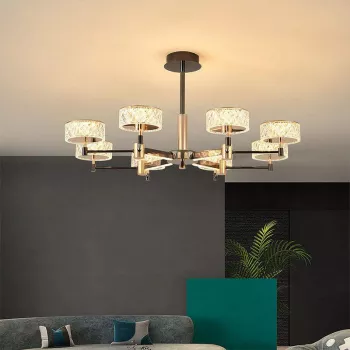
If you’re looking for a single fixture that feels curated the moment it’s switched on, start with the Modern Minimalist Luxury Italian Pendant Light for Living Room and Dining Area.
Best Placement Ideas for Living Rooms and Dining Areas
Pendant lighting is most effective when it’s placed to serve people first—where they gather, eat, talk, and relax—rather than only following the room’s geometry.
Dining table: the classic anchor
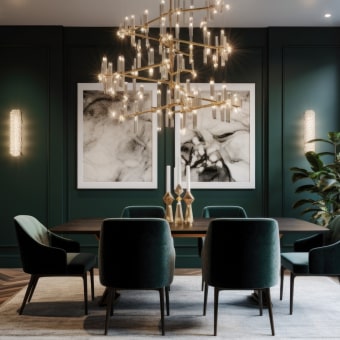
Centered over a dining table, a pendant visually “locks” the table into the room and provides direct, practical light for meals, homework, and entertaining. The key is to keep illumination comfortable and glare-free so faces and food look inviting.
Living room seating zone: bring light down to human scale
In many living rooms, recessed lighting alone can feel flat or too overhead. A pendant positioned above the seating or coffee-table area brings light closer to the conversation zone, adding depth and making the layout feel intentional—especially at night.
Open-plan layouts: define zones without walls
In combined living/dining spaces, pendants can separate “lounge” from “dining” without adding partitions. One fixture can highlight the table while another (or a complementary lamp layer) supports the seating zone, creating two distinct moods in one continuous footprint.
High ceilings: fill vertical space gracefully
Tall rooms can feel cavernous when light stays at the ceiling plane. A pendant adds a vertical focal point that softens that emptiness while improving functional brightness where it’s actually needed.
Layering: prevent harsh, single-source lighting
Even a beautifully designed pendant works best as part of a layered plan—pair it with wall sconces or floor lamps to avoid a stark “spotlit” effect and to reduce contrast fatigue across the room.
| Location | Typical Bottom-of-Fixture Height | Spacing Notes |
|---|---|---|
| Over dining table | 28–34 in (71–86 cm) above tabletop | Center on table; for long tables consider 2–3 fixtures evenly spaced |
| Over kitchen island (if used in adjacent zone) | 30–36 in (76–91 cm) above countertop | Keep 24–30 in (61–76 cm) between pendant centers |
| Living room seating area | 72–84 in (183–213 cm) above floor (clear headroom) | Align with coffee table or seating cluster, not necessarily the room’s center |
| Entry-adjacent open space | 80+ in (203+ cm) above floor | Avoid glare lines when approaching from doorways |
Choosing the Right Size and Number of Pendants
Scale is what makes a pendant feel “designer” instead of accidental. A fixture should relate to the surface below it—table, island, or seating footprint—more than the overall room dimensions.
Light Quality: Brightness, Color Temperature, and Dimming
For a practical refresher on brightness and color characteristics, ENERGY STAR’s guidance on choosing bulbs is a helpful reference: ENERGY STAR — Light Bulbs (Choosing Brightness and Color). For deeper lighting best practices, the Illuminating Engineering Society (IES) is an industry-standard authority.
Materials, Finish Pairings, and Styling Tips
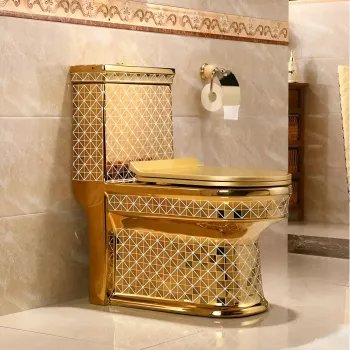
For a home that leans into sculptural luxury across rooms, consider pairing statement lighting with equally bold fixtures elsewhere, like the Luxurious Gold Artistic One-Piece Ceramic Toilet with Dual-Flush System in a powder room or primary bath—especially if your overall design approach favors gallery-like focal points.
Installation and Safety Considerations
For a high-level overview of lighting safety and certification standards, UL Solutions is a recognized authority: UL Solutions — Lighting Certification and Safety.
Product Snapshot
| Item | Details |
|---|---|
| Product page | https://sculptori.com/modern-minimalist-luxury-italian-pendant-light-for-living-room-and-dining-area/ |
| Price | 631.99 USD |
| Stock status | In stock |
FAQ
How high should a pendant light hang over a dining table?
Common guidance is about 28–34 inches above the tabletop, then fine-tuned based on ceiling height, fixture size, and whether the light source causes glare at eye level.
Should a living room pendant be centered in the room or over the seating area?
It often looks and functions best centered over the seating or conversation zone. In open-plan layouts, that placement helps define the lounge area even if it isn’t the geometric center of the room.
What color temperature works best for a combined living and dining space?
Warm white around 2700K–3000K is typically comfortable and flattering for both people and food. Adding a dimmer makes the space more flexible for entertaining versus everyday living.









Leave a comment