360° Rotating Grain Dispenser for Tidy Pantry Storage
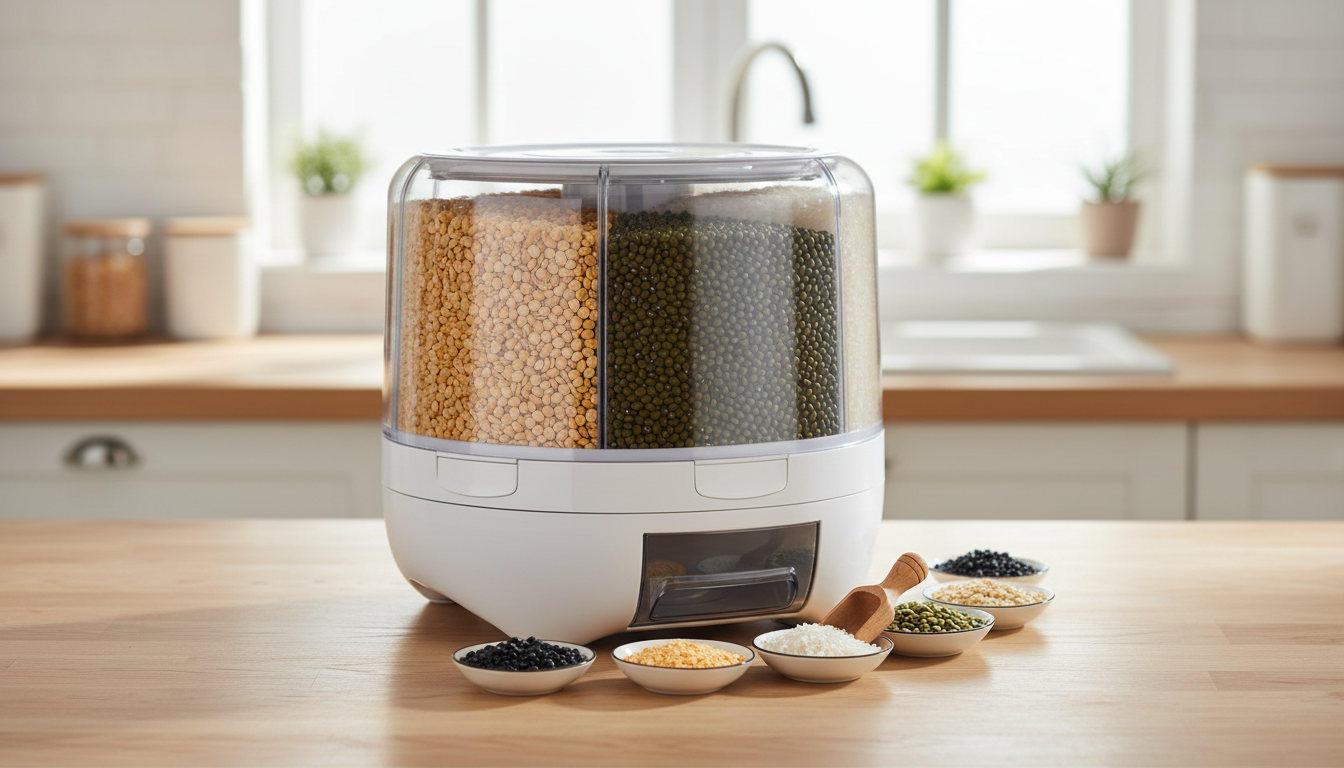
360° Rotating Rice & Grain Dispenser: Tidy Storage and Fast Measuring for Everyday Cooking
A rotating rice and grain dispenser keeps pantry staples visible, protected, and easy to portion—without juggling multiple bags and containers. With a 360° turntable-style design, it helps streamline daily cooking, reduce mess, and make it simpler to track what’s running low.
Why a rotating dispenser changes the way staples are stored
Dry goods are some of the most-used ingredients in many kitchens, but they’re also the easiest to let sprawl: half-rolled rice bags, clipped cereal liners, and mismatched jars on a crowded shelf. A rotating dispenser brings those everyday staples into a single, consistent system.
- Cuts down on clutter by consolidating common dry goods (rice, oats, beans, lentils, cereal) into one organized station.
- Speeds up cooking prep: rotate to the desired compartment and portion in seconds.
- Improves visibility: clear sections make it easier to spot what needs refilling and avoid forgotten open bags.
- Helps reduce spills and pests compared with torn packaging or loosely clipped bags.
- Encourages consistent portioning for meal planning and quick weekday routines.
Meet the 360° Rotating Rice & Grain Dispenser
The main advantage of a turntable-style dispenser is access: instead of pulling out multiple containers, you rotate the unit to the staple you need and measure right away. It’s a small change that can make daily cooking feel smoother—especially when the pantry is tight or the countertop is already busy.
- Rotating base makes it easy to access multiple grains without moving the container around the counter or pantry shelf.
- Designed for dry staples: ideal for rice varieties, quinoa, oats, beans, lentils, and similar pantry items.
- A single storage hub can replace a mix of jars, bags, and bulky bins—especially helpful in smaller kitchens.
- Practical for households that cook grains often and want quick, repeatable measuring and refilling.
- Works well near a cooking zone (for daily use) or inside a pantry (for centralized storage).
Rotating dispenser vs. common storage options
| Storage option | Best for | Trade-offs |
|---|---|---|
| 360° rotating dispenser | Multiple staples in one spot; quick access; visibility | Needs a stable footprint; compartments should be kept dry and clean |
| Individual airtight canisters | Maximum sealing for one item; stackable sets | More pieces to manage; slower switching between items |
| Original packaging (bags/boxes) | Lowest cost; minimal setup | Prone to spills; harder to keep fresh; less organized |
| Large bulk bin | High-volume single staple (e.g., rice only) | Not ideal for variety; scooping can be messy |
What to store in it (and what to avoid)
A rotating dispenser is at its best with dry, free-flowing staples that pour easily and don’t carry strong odors. If you regularly cook a mix of grains and legumes, you’ll get the most value by dedicating compartments to your “weekly regulars.”
- Great choices: white rice, jasmine/basmati, brown rice (shorter storage window), quinoa, rolled oats, barley, dry beans, dry lentils, cereal, and dry pasta shapes (if compartments fit).
- Avoid moisture-sensitive or sticky items if the environment is humid: brown sugar, dried fruit, anything with residual oil or syrup.
- Avoid powders that clump or create fine dust (some flours): they may be better in dedicated airtight canisters.
- Keep strong aromas separate (e.g., heavily seasoned mixes) to prevent odor transfer between compartments.
- Label compartments (masking tape or small tags) for quick identification, especially for similar-looking grains.
For a reality check on typical pantry timelines, the USDA’s FoodKeeper resource is a helpful reference point.
Placement ideas for small kitchens and busy pantries
Where you place a rotating dispenser can determine whether it’s a daily convenience or something you forget about. The goal is easy rotation, easy pouring, and minimal exposure to moisture.
- Countertop station: place near a prep area for frequent use; rotate and portion directly into a measuring cup or bowl.
- Pantry shelf: choose a shelf height that allows easy opening and refilling without pulling the unit forward.
- Dedicated “grain corner”: pair with measuring cups, a small funnel, and labels to make refills quick and tidy.
- Stability matters: use a flat surface and avoid overcrowding the surrounding area to keep rotation smooth.
- Keep away from heat and steam: avoid placing it right next to the stove or kettle to reduce moisture exposure.
How to refill and keep it fresh
A few simple habits go a long way toward keeping grains clean, pourable, and pleasant to cook with—especially in busy households where refills happen quickly.
For general safe-handling basics that support a cleaner kitchen routine, the USDA FSIS Kitchen Companion—Safe Food Handling guide is a solid overview.
Cleaning and maintenance routine
Who it’s best for
Product picks for a tidier pantry
360° Rotating Rice & Grain Dispenser
Plastic Bread Box with Airtight Lid for Fresh Bread and Food Storage
FAQ
Can different grains be stored side by side without mixing flavors?
Yes for most neutral staples (rice, oats, quinoa, beans) if compartments are separated. Avoid storing strong-smelling seasoned mixes next to mild grains, and keep compartments clean and dry to reduce odor transfer.
How often should a rotating grain dispenser be cleaned?
Wipe and spot-clean as needed for spills, and do a deeper clean when switching contents or every few weeks to a month depending on usage. Always dry completely before refilling.
Is it safe to store brown rice long-term in a pantry dispenser?
Brown rice has higher oil content and typically has a shorter shelf life than white rice. Store it in a cool, dry place, buy smaller quantities, and rotate stock regularly for best quality.















Leave a comment