Calm Your Mind: Guided Meditation Audio Course for Anxiety
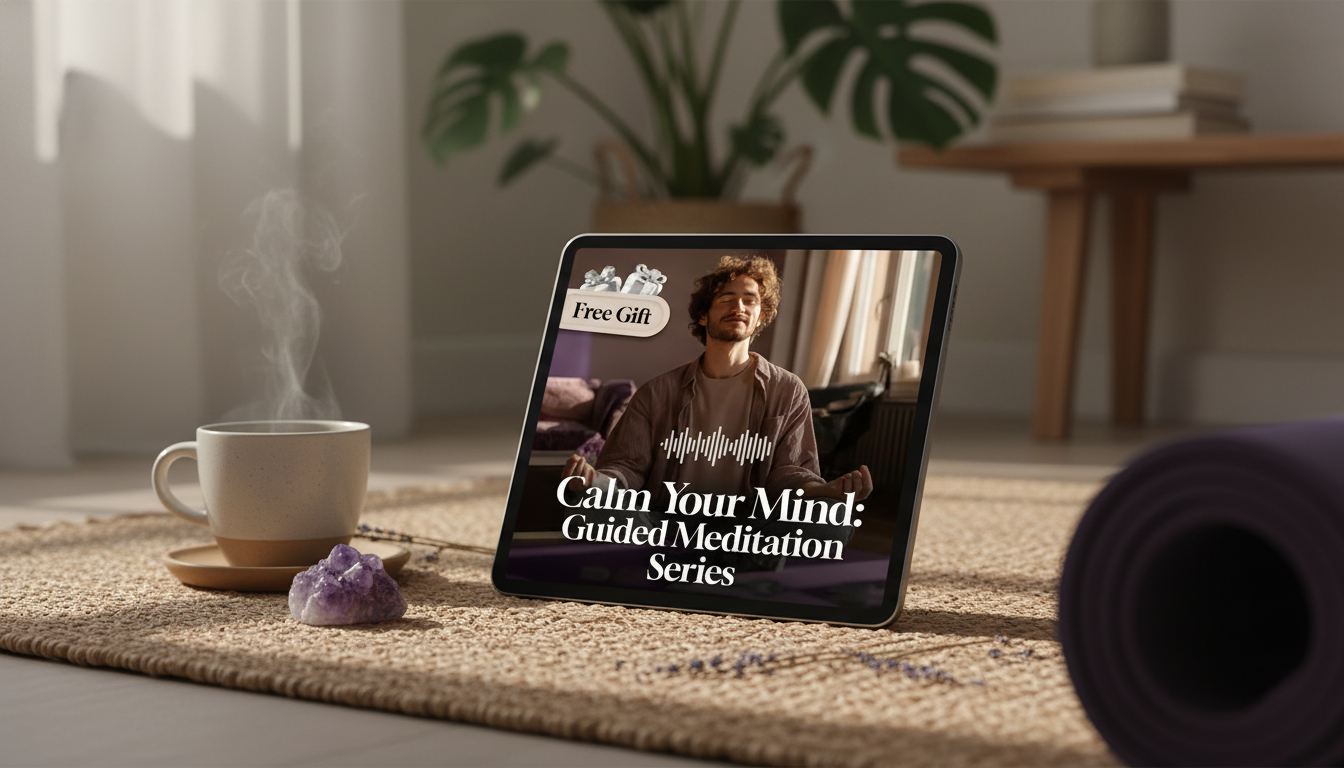
Calm Your Mind: Guided Meditation Audio Course for Anxiety Relief
Racing thoughts, tight shoulders, and a constant sense of pressure can make calm feel out of reach. A guided meditation audio course offers a simple way to step out of the mental noise—using clear prompts, steady pacing, and repeatable practices that support relaxation, emotional regulation, and better sleep over time.
Instead of trying to “do it right” on your own, you get a supportive structure: where to place attention, how to soften tension, and how to return when your mind inevitably wanders. Over repeated listens, those same cues can become skills you access off the cushion—during work stress, bedtime rumination, or a sudden spike of worry.
What this guided series is designed to support
- Interrupting anxious thought loops with structured attention cues (breath, sound, body sensations)
- Downshifting the stress response through slow breathing and progressive relaxation prompts
- Building a consistent routine that makes calm more accessible during real-life triggers
- Improving sleep readiness by reducing mental rumination at bedtime
- Creating a “reset” option that works even on low-energy days (press play and follow along)
How guided meditation helps when anxiety feels loud
- External guidance reduces decision fatigue by telling the mind what to do next (notice, soften, return).
- A steady voice and pacing can act as an anchor when attention keeps slipping into worry.
- Body-based cues (jaw, shoulders, belly) help shift from thinking to sensing, which often lowers intensity.
- Nonjudgmental language trains a kinder response to anxious sensations instead of fighting them.
- Repetition supports skill-building: noticing early stress signals, returning to breath, and re-centering faster.
Many people find that anxiety is amplified by the feeling of being “stuck in the head.” Guided practice gently relocates attention into the body, where you can recognize tension patterns and soften them before they snowball. Over time, that can translate to fewer moments of bracing, less jaw-clenching, and a quicker ability to recover after stress.
For a deeper look at how mindfulness-based practices support stress reduction, the American Psychological Association offers a clear overview: Mindfulness meditation: A research-proven way to reduce stress. The Mayo Clinic also summarizes how meditation can shift stress physiology and improve coping: Meditation: A simple, fast way to reduce stress.
What’s inside the audio course experience
- Guided sessions that move from settling the body to working with thoughts and emotions
- Practice styles that may include breath awareness, body scan, grounding, and visualization
- A progression that can start with short sessions and build toward longer, deeper practice
- Gentle reminders for common obstacles: restlessness, sleepiness, self-criticism, and intrusive thoughts
- A repeat-friendly format so favorite tracks can become go-to tools for specific moments (work stress, bedtime, panic spikes)
Common session types and when to use them
| Session type | Best time to use | What it tends to support |
|---|---|---|
| Grounding and breath focus | Morning or before stressful tasks | Steadier attention, calmer baseline |
| Body scan relaxation | Afternoon reset or tension days | Release of physical stress, less muscle tightness |
| Thoughts and emotions practice | After a trigger or during worry spirals | Less reactivity, more clarity and choice |
| Sleep wind-down meditation | 30–60 minutes before bed | Reduced rumination, easier transition to rest |
| Short “emergency calm” track | Acute anxious moments | Fast re-centering, breathing rhythm, grounding |
A simple 7-day routine to get started
- Day 1: Choose a short track and practice at the same time of day to build the habit.
- Day 2: Repeat the same track; consistency matters more than variety early on.
- Day 3: Add one cue outside practice (one slow exhale before opening email or messages).
- Day 4: Try a body scan track to notice where anxiety sits physically.
- Day 5: Use a track after a minor stressor to practice recovery (not only when calm already exists).
- Day 6: Do a wind-down session in the evening and reduce stimulation afterward (dim lights, limit scrolling).
- Day 7: Pick the track that worked best and set it as a default for the next week.
If sleep is a major pain point, consider pairing the routine with a consistent pre-bed “downshift window.” The Sleep Foundation outlines how mindfulness and relaxation can support better sleep readiness here: Getting better sleep with mindfulness and relaxation.
Making the practice stick (even on busy days)
Who this series is a good fit for
Using guided meditation alongside other supports
Recommended resources (in stock)
- Calm Your Mind: Guided Meditation Series | Audio Course | Anxiety Relief Meditation — a guided, repeat-friendly set of tracks built for anxious moments, emotional regulation, and sleep wind-down.
- Mindful Moments: How Mindfulness Eases Stress and Boosts Your Daily Calm | Digital Guide for Stress Relief, Daily Calm, and Mindful Living — a supportive read for building day-to-day mindfulness cues beyond formal sessions.
- Breathe, Mama, Breathe: Finding Calm in the Kid-Chaos | Parent Pause: Quick Relax in Chaos Handbook | Digital Download Guide for Moms — quick, practical calming tools for parents who need short resets between real-life demands.
FAQ
How long should a guided meditation be for anxiety relief?
Starting with 5–10 minutes daily is often enough to build consistency without feeling overwhelming. As it becomes more familiar, you can gradually increase session length based on what feels supportive rather than forced.
Can guided meditation help during a panic spike?
Yes—short grounding or breath-focused tracks can help reduce escalation by giving your attention one simple job at a time. Keeping your eyes open, feeling your feet or hands, and emphasizing longer exhales can make the practice feel safer and more stabilizing in the moment.
Is it okay to fall asleep during the sessions?
It’s common, especially during evening or bedtime tracks, and can be a sign your system is finally downshifting. For daytime practice, try sitting upright, practicing earlier, or choosing a more alertness-oriented session style.















Leave a comment