Mindful Moments for Stress: 60-Second Calm Practices
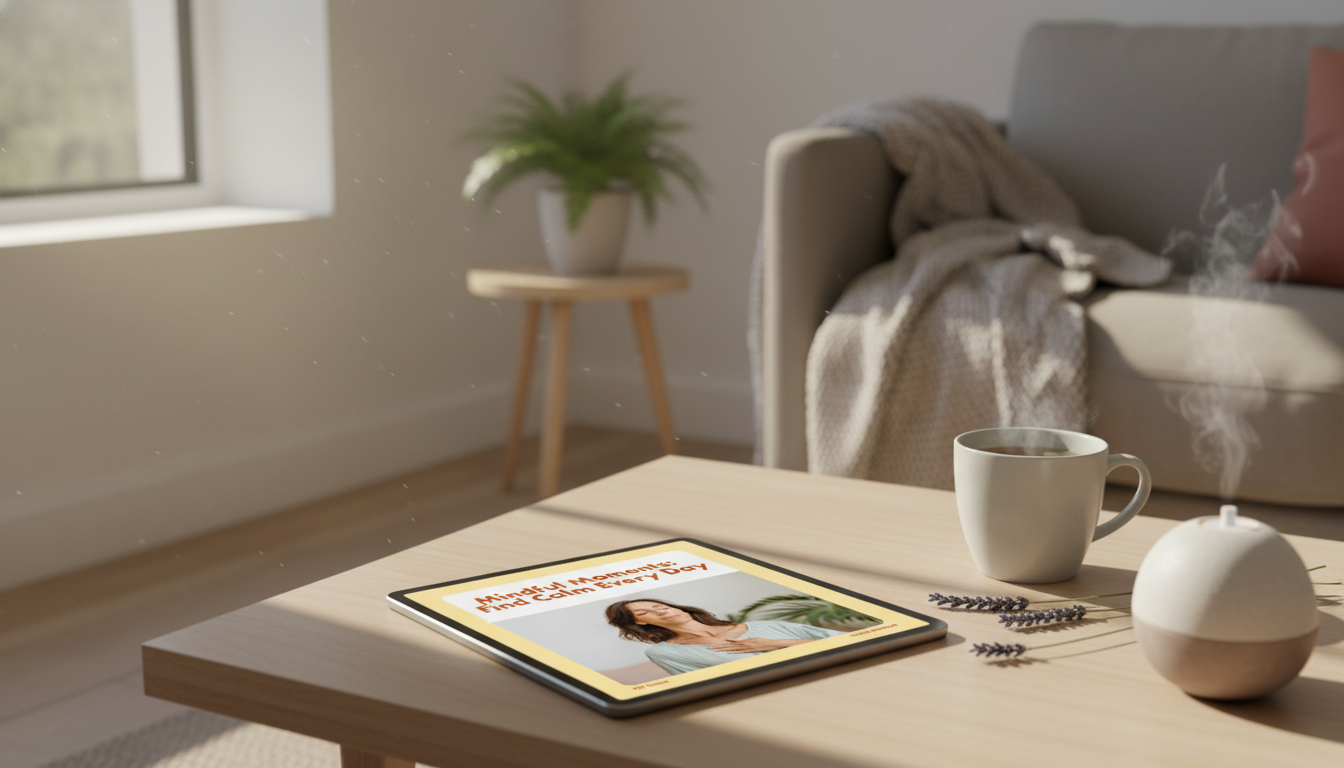
Mindful Moments: Simple Practices to Ease Stress and Build Daily Calm
Stress often shows up in small, repeatable moments—an overflowing inbox, a tense commute, a difficult conversation, or the never-ending to-do list. Mindfulness meets those moments with a practical skill: noticing what is happening right now with less judgment and more choice. With short, repeatable exercises, the nervous system can downshift from reactivity into steadier focus and calm. This guide outlines easy ways to bring mindfulness into ordinary routines so calm becomes a daily habit rather than an occasional break.
What “mindful moments” really are
A mindful moment is a brief pause to notice what’s happening—sensations, thoughts, emotions, and the environment—without trying to force anything away. It can take as little as 30–90 seconds, which is often enough to interrupt autopilot and reduce the momentum of stress.
- A mindful moment is a brief pause to notice sensations, thoughts, emotions, and surroundings—without trying to force them away.
- Mindfulness is not emptying the mind; it is training attention to return when it wanders.
- Even 30–90 seconds can interrupt autopilot and reduce stress momentum.
- Consistency matters more than duration; small practices stacked throughout the day compound.
Think of these pauses as “attention reps.” Each time you notice you’ve drifted and gently return to the present, you strengthen the skill that makes calm more available when life feels loud.
How mindfulness reduces stress in the body and mind
Stress often pulls attention into the future (worry) or the past (rumination). Mindfulness shifts attention back to direct experience—breath moving, feet on the floor, sounds in the room—which can soften anxious “what if” loops and create a tiny but powerful gap between a trigger and your response.
- Attention shifts from rumination to direct experience, which can soften anxious “what if” loops.
- Slow, deliberate breathing supports parasympathetic activation (the body’s calming response).
- Noticing stress signals early (tight jaw, shallow breath, racing thoughts) creates a window to respond rather than react.
- Naming emotions (“stress,” “worry,” “overwhelm”) can reduce their intensity and improve clarity.
- Regular practice supports emotional regulation and steadier concentration during demanding tasks.
For a deeper look at the science and practical applications, see resources from the American Psychological Association and the Mayo Clinic.
Quick mindfulness tools for common stress triggers
| Situation | 30–90 second practice | What to notice | Helpful cue |
|---|---|---|---|
| Before opening email/messages | Three slow breaths; relax shoulders on each exhale | Shoulders, jaw, breath depth | Hand on chest |
| During a tense conversation | Feel feet on the floor; soften gaze; slow the next breath | Heat in face, urge to interrupt | Touch thumb to fingertip |
| Overthinking at night | Body scan from forehead to toes; exhale longer than inhale | Where tension collects | Dim lights |
| Mid-afternoon slump | Stand; stretch; 10 mindful steps | Energy level, posture | Set a timer |
| Feeling rushed | Pause; label: “rushing”; choose one next action | Speed in thoughts, tightness in chest | One hand on abdomen |
A simple daily rhythm: calm in under 10 minutes total
A consistent rhythm removes the “when should I do this?” question. Instead of trying to carve out a perfect meditation block, use short practices at predictable times.
- Morning (2 minutes): breathe and set one gentle intention for the day (e.g., “steady,” “kind,” “one thing at a time”).
- Midday (3 minutes): check in with the body—posture, breath, tension—and reset before the next task.
- Evening (3–5 minutes): reflect without judgment—what helped, what was hard, what to release before sleep.
- Use “anchors” to remember: first sip of coffee/tea, sitting in the car, handwashing, or plugging in a phone.
- Track progress by noticing fewer spikes in reactivity, faster recovery, and clearer decision-making—not by perfect calm.
If you want a ready-made structure you can pull up on your phone during busy days, Mindful Moments: How Mindfulness Eases Stress and Boosts Your Daily Calm | Digital Guide for Stress Relief, Daily Calm, and Mindful Living is designed around quick, repeatable steps that fit real routines.
Five micro-practices that fit real life
1) Mindful breathing (about 60 seconds)
Inhale through the nose and exhale a little longer than you inhale. Repeat for 5–8 cycles, letting the shoulders drop on each out-breath.
2) 5–4–3–2–1 grounding (about 90 seconds)
Name 5 things you can see, 4 you can feel, 3 you can hear, 2 you can smell, and 1 you can taste. This gently pulls attention out of spiraling thoughts and back into the present.
3) Single-task reset (2 minutes)
4) Compassion pause (30–60 seconds)
5) Mindful transition (15–45 seconds)
Making mindfulness stick when life gets busy
For parents who need calm fast in noisy, high-demand moments, Breathe, Mama, Breathe: Finding Calm in the Kid-Chaos | Parent Pause: Quick Relax in Chaos Handbook | Digital Download Guide for Moms focuses on quick resets that work even when you don’t get quiet time.
For additional beginner-friendly guidance, the NHS mindfulness overview offers simple ways to get started and stay consistent.
A guided path to calmer days
FAQ
How long does it take for mindfulness to help with stress?
Some people feel calmer in just a few minutes, especially with slow breathing. Lasting changes usually come from consistent daily practice over weeks, so starting with 1–3 minutes a day and building gradually tends to work best.
What if the mind won’t stop racing during mindfulness?
Racing thoughts are common; noticing them is part of the practice. Label what’s happening (“thinking,” “worrying”) and return attention to something concrete like the breath, the feeling of your feet, or nearby sounds.
Can mindfulness be done without meditation sessions?
Yes—brief pauses woven into routines can be just as effective for building the habit. Try micro-practices during transitions like handwashing, walking to the car, eating lunch, or powering down for the night.
















Leave a comment