1500W SDS-Plus Rotary Hammer: 4 Modes for Concrete
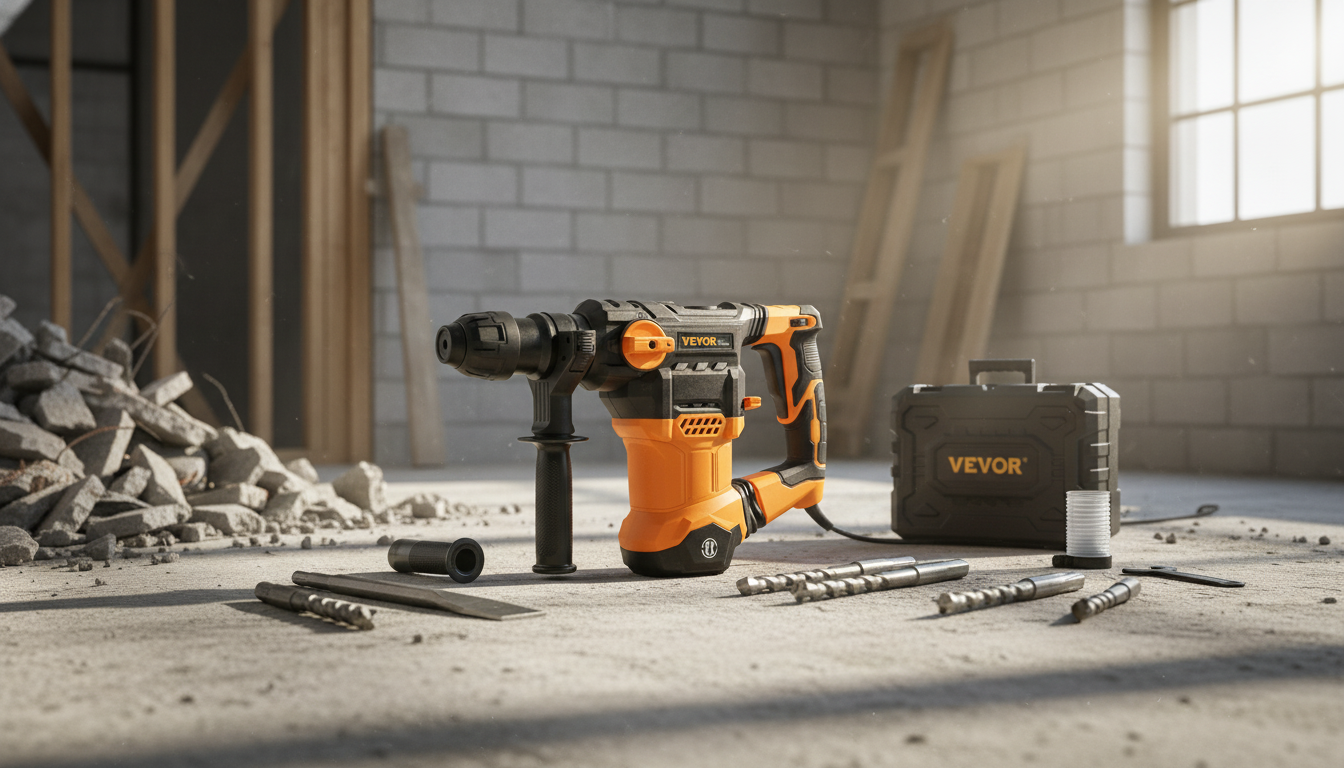
1500W SDS-Plus Rotary Hammer Drill: Corded Demolition Power with 4 Working Modes for Concrete
A corded SDS-Plus rotary hammer is built for jobs where a standard drill stalls out—drilling into concrete, breaking tile, chasing channels, and handling light demolition. This guide explains what a 4-mode rotary hammer is best at, what to check before buying, how each mode behaves on real materials, and how to run the tool safely for cleaner holes and longer service life.
What a rotary hammer does differently than a hammer drill
Rotary hammers and hammer drills can look similar, but they deliver impact in very different ways. A rotary hammer uses a piston-driven mechanism that produces stronger, more consistent blows into masonry—so the bit advances faster with less strain on the motor than typical hammer-drill vibration.
- Piston-driven impacts: Higher-impact energy helps cut through concrete aggregate rather than just buzzing against it.
- SDS-Plus bit retention: Bits lock into the chuck to reduce slippage and improve energy transfer, which usually means faster drilling in concrete and block.
- Designed for repeat work: Rotary hammers are built for repeated drilling/chiseling cycles without overheating as quickly as general-purpose drills.
- Best-fit tasks: Anchor holes, block and brick drilling, careful rebar-adjacent drilling, tile and mortar removal, and masonry touch-ups.
Key features to understand on a 1500W SDS-Plus corded model
A 1500W corded rotary hammer sits in a sweet spot for renovation and maintenance: enough power for sustained work, while still using the widely available SDS-Plus accessory format.
- Power (1500W): Supports long sessions where consistent speed matters—multiple anchor holes, repeated through-holes, or extended chiseling.
- SDS-Plus chuck: Works with common masonry bits and chisels, and enables quick changes when switching from drilling to chipping.
- Corded operation: Steady output without battery fade; ideal in a garage, workshop, or any site with reliable power.
- 4-mode selector: Lets one tool cover drilling, hammer drilling, chiseling, and chisel angle setup—choosing the right mode reduces wear and improves control.
- Ergonomics and vibration control: Side-handle stability and balanced grip often affect accuracy and fatigue more than raw wattage numbers.
How to use the 4 modes (and when each one matters)
Mode selection is where a rotary hammer becomes more than “a stronger drill.” Switching to the correct mode keeps holes rounder, reduces stuck bits, and helps surface-removal work look intentional instead of torn up.
Drill-only mode
Hammer drilling mode
Chisel-only mode
Chisel positioning/adjust mode
| Mode | Best for | Bit/Chisel type | Tips for cleaner results |
|---|---|---|---|
| Drill-only | Starting holes, non-masonry work (where supported) | Standard drill bit / adapter if compatible | Use slower starts; keep the tool perpendicular to prevent walking. |
| Hammer drilling | Concrete/block holes for anchors and fasteners | SDS-Plus masonry bit | Clear dust frequently; moderate pressure; keep RPM steady. |
| Chisel-only | Tile removal, mortar cleanup, light demolition | Flat chisel, scaling chisel, point chisel | Work in shallow passes; pry with the chisel angle, not brute force. |
| Chisel positioning | Setting chisel orientation for edges and channels | Any SDS-Plus chisel | Lock angle before contact; re-check alignment near corners. |
Choosing the right bits, chisels, and accessories
- SDS-Plus masonry bits: Choose diameter and length to match the anchor spec. Longer bits flex more, so use the shortest bit that reaches the required depth.
- Chisels: Point chisels concentrate force for cracking; flat/scaling chisels remove surface material faster; wider blades can speed tile and thinset removal.
- Depth control: Mark depth with tape or use a depth stop (if available) to avoid over-drilling anchor holes.
- Dust management: Silica dust is a serious hazard—use a vacuum shroud or dust-extraction setup when drilling indoors or for extended periods. OSHA guidance is a solid baseline: OSHA Respirable Crystalline Silica Standard (Construction).
- Lubrication: A light grease on the SDS shank (per manufacturer guidance) can reduce wear and make bit changes smoother.
Practical techniques for faster drilling in concrete
Light demolition and surface removal without damaging the substrate
Safety essentials for rotary hammer work
- Eye and hearing protection: Concrete drilling and chipping are loud and produce flying debris.
- Respiratory protection: Use dust extraction and appropriate respiratory PPE when drilling concrete. For practical control methods, see: NIOSH Silica Dust Control in Construction.
- Gloves and grip: Maintain a firm two-hand hold to manage torque if the bit binds. Gloves can improve control and reduce abrasion.
- Electrical safety: Inspect the cord and plug, use GFCI protection in damp areas, and keep the cord clear of the work zone.
- Workpiece awareness: Clamp small pieces. On walls/slabs, verify no hidden utilities (wiring/plumbing) before drilling.
Maintenance and troubleshooting to keep performance consistent
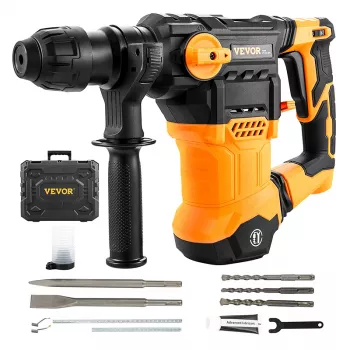
Product spotlight: 1500W Rotary Hammer Drill SDS-Plus Corded Demolition Tool with 4 Modes
1500W Rotary Hammer Drill SDS-Plus Corded Demolition Tool with 4 Modes for Concrete
For long projects, a short reset between heavy chiseling sessions can help maintain focus: Mindful Moments: How Mindfulness Eases Stress and Boosts Your Daily Calm | Digital Guide
FAQ
Can an SDS-Plus rotary hammer drill through concrete better than a regular hammer drill?
Yes. A rotary hammer’s piston-driven impact mechanism delivers stronger blows and transfers energy more efficiently through the SDS-Plus bit, so it typically drills faster and with less stress during repeated concrete work.
Which mode should be used for removing tile or thinset from concrete?
Use chisel-only mode with a flat or scaling chisel. Keep a shallow angle and work in controlled passes so the tool lifts material without gouging the concrete underneath.
How can silica dust be reduced when drilling into concrete indoors?
Use a dust shroud connected to a HEPA-rated vacuum, ventilate the area, and avoid dry sweeping. In some situations, wet methods may be appropriate if they’re compatible with the workspace and electrical safety requirements.















Leave a comment